Archive for the ‘books’ Category

orwell on dickens

Tuesday, March 6th, 2007

I’ve not read a single word of Dickens. I don’t know the plot of a single book, apart from superficial knowledge of Oliver Twist. For a long time this has seemed like a major hole in my reading. I’ve occasionally considered doing something about it.

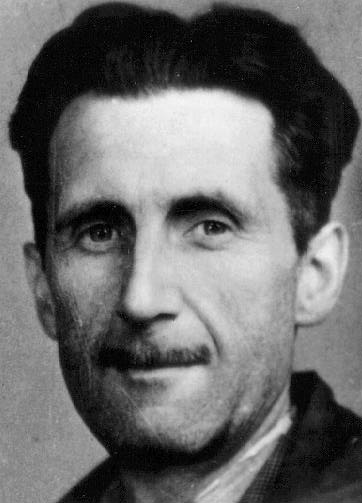
But I have just finished a 50-page essay on Dickens by Orwell. I’ve read the obvious Orwell but never knew anything about the man. I like Orwell. The Dickens essay is good. After reading it I have even less interest in reading Dickens. Of course I should probably make up my mind about Dickens from reading him first hand. But life is short. Orwell strongly confirmed my suspicions. And so I’ve decided to skip Dickens completely. Forever.

It’s nice to have the hole, and to now know that it’s permanent. It has strategic value. Plus I have the good fortune that my hole happens to be Dickens. He wasn’t worth reading anyway.

in praise of simplicity

Saturday, February 24th, 2007

In her keynote at PyCon a few minutes ago, Adele Goldberg just mentioned Mitch Resnick’s book Turtles, Termites and Traffic Jams. I wrote a review of the book for the Complexity journal in 1994 or 1995:

There is an important trade-off between realism and understanding in the construction of models of complex systems. At one extreme, a model may be so realistic that it allows no increase in understanding of the modeled system. At the other, the model may be precisely understood but be so divorced from reality that this understanding cannot be related back to the original system. The construction of a model requires that difficult choices be made about what aspects of a system should and should not be modeled, and about how abstractions, simplifications and generalizations are to be justified and implemented. Any unchecked tendency to include more than is absolutely necessary can soon result in a model that, at least aesthetically, feels somehow bloated. It is easy to underestimate the difficulty involved in these decisions, and in the requirements of good judgement and taste in the construction of models.

It was with great pleasure then that I read Mitchel Resnick’s “Turtles, Termites, and Traffic Jams: Explorations in Massively Parallel Microworlds” (1994, MIT Press). Resnick’s StarLogo system achieves a balance between simplicity and realism that it would be difficult to improve on. This is an accomplishment in itself, but Resnick takes us much further. His StarLogo is not a single model, but a platform for exploring a wide range of decentralized systems. The StarLogo system deals so effectively with the trade-off between realism and understanding, that at times one tends to forget it is an issue.

The most provocative situation in modeling, and a sure sign that a model has dealt with the trade-off well, occurs when an apparently simple model produces unexpected results. At these times, the potential for increased understanding is at its greatest. The probability of explaining the surprising results is high, because the model is apparently simple. The decentralized systems constructed and described by Resnick repeatedly produce surprises of this kind. The delightful simplicity of StarLogo makes it possible to understand what is happening, and why our expectations were incorrect. These systems, few and far between, offer the highest returns for the effort we must invest to understand and use them.

In five short chapters, Resnick guides us through thinking about centralized and decentralized mindsets, the StarLogo system, and reflections on psychology and education. The “Explorations” chapter describes simulations (or, as Resnick prefers, stimulations) of Slime Molds, Artificial Ants, Traffic Jams, Termites, Turtles, Frogs, Forest Fires, Geometry and Recursive Trees. Resnick guides us through the thinking behind the construction of these simulations, presents alternative ideas for their construction, and argues well for decentralized views of these systems. Resnick offers the reader challenges, surprises, insights, and simple heuristic guidelines that he developed as a result of these explorations. It is remarkable that Resnick includes the entire StarLogo programs for these systems in the text of the book. The code, only once slightly over two pages in length, is clear, instructive, and incredibly simple.

Resnick’s book is a little treasure. Though much of the book is presented in the context of high-school education, any temptation to discount it on this account should be resisted. Resnick has something to teach us all. If it has a failing, it is the modesty of its presentation and claims, which may retard its recognition in “higher” academic circles. Virtually every aspect of this book should be instructive to researchers involved in agent-based modeling and simulation, especially to those in biology and artificial life. To the many scientists interested in agent-based computational modeling who are, however, not computationally inclined, read this book. It is an example of someone getting a set of deceptively difficult problems absolutely right. There are many ways in which to appreciate “Turtles, Termites, and Traffic Jams.” It is an important book.

Finishing Proust

Friday, December 1st, 2006

I finished reading In Search of Lost Time early last (Northern hemisphere) summer. It took me six months, reading an average of 20 to 25 pages a day. Russell took much longer, after I sneakily distracted him by buying him a beautiful 7-volume copy of The Decline and Fall of the Roman Empire – which he then read, putting Proust aside, unsuspectingly letting me sail past him and into the record books. There aren’t too many books on which you can blow a 1,500 page lead and still lose by 1,000 pages.

A few hours after Russell finally finished, he sent me mail. I speculated on the number of people that had finished it since he did. In other words, how often, anywhere on earth, does someone finish Proust?

Here’s an estimated answer, with plenty of assumptions:

Assume only one person in 10,000 actually _finishes_ the whole thing.

Assume it takes an average of a year to read it all.

So you’ve got 6,000,000,000 / 10,000 = 600K people currently on earth who will read it.

Assume that people’s ages are uniformly distributed, and that everyone dies at 75.

Assume that no-one finishes the book before turning 16.

So the people who are currently 0-15 have not started the book yet. So only (75 – 15) / 75, or 80%, of the 600K (= 480K) alive who will read it, might finish in the next year.

How many will finish in the next year?

Assume that half the people who will read it have already done so. That leaves 240K who will finish it at some point in their remaining lifetime.

Finally, if we assume these people finish at uniform ages, you’ve got 240K finishers finishing over 60 years, or 4K finishers per year.

There are 365 x 24 = 8760 hours in a year, so we have one person finishing every 8760 / 4K = 2.19 hours.

steak and eggs

Thursday, November 2nd, 2006

Here’s a nice paragraph from Illywhacker (Book 3, ch 59, p572 in my paperback faber & faber edition):

I sat in my chair and watched the hessianed goanna dropped into the boot. I knew, that day, that God is a glutton for grief, love, regret, sadness, joy too, everything, remorse, guilt – it is all steak and eggs to him and he will promise anything to get them. But what am I saying? There is no God. There is only me, Herbert Badgery, enthroned high above Pitt Street while angels or parrots trill attendance.

What a great name, Herbert Badgery.

illywhacker

Thursday, October 12th, 2006

I’ve had Peter Carey’s Illywhacker high on my to-read list for a couple of years, following a glowing recommendation from Bambi. I started it two days ago and…… it’s great.

To the two faithful readers of this blog I say “thanks” and “what about you Russell?”